VA Repair Loan Limits: How Purchase Price and Repair Costs Shape Your Maximum Loan
Understanding the Three Numbers That Drive Your VA Renovation Loan
When you are planning a home renovation through a VA loan, the amount you can borrow does not come down to a single figure. Instead, three numbers interact to set your maximum loan: the purchase price of the home, the estimated cost of repairs, and the maximum loan amount the VA program will support. Getting a clear picture of how these numbers connect helps you plan a realistic renovation budget and avoid surprises at the closing table.
What the VA Repair Loan Limit Actually Means
The VA repair loan limit is the ceiling on what a lender can offer under the VA renovation loan program. It is not a fixed dollar amount that applies to every borrower. Instead, it is calculated based on the home's value after renovations are complete, known as the "as-completed value." The VA generally allows a loan up to the as-completed value, provided that the borrower's entitlement and other program rules are satisfied. This means the limit is directly tied to how much the property will be worth once the work is finished.
For a veteran buying a fixer-upper, this is good news. The renovation loan can cover both the purchase price and the cost of repairs, as long as the total does not exceed the home's projected value after the work is done. The lender will require an appraisal that estimates the as-completed value, and that appraisal becomes the foundation for the loan limit.
Purchase Price: The Starting Point
The purchase price is what you agree to pay the seller for the property. In a standard VA loan, the loan amount is based on the lower of the purchase price or the appraised value. But with a renovation loan, you have more flexibility because the loan includes money for repairs. The purchase price plus the repair costs together form what is called the "acquisition cost." The acquisition cost is the total amount needed to buy the home and make it livable according to your renovation plan.
The purchase price matters because it sets a floor for the loan. If you negotiate a lower purchase price, you may have more room in the loan limit to cover repairs. Conversely, if you pay close to the as-completed value, there is less headroom for renovation costs. Savvy buyers often look for properties where the purchase price is well below the potential after-repair value, leaving enough loan capacity for meaningful upgrades.
Repair Costs: Estimating What the Work Will Actually Cost
Repair costs are the second major piece of the puzzle. These must be itemized and justified in the renovation loan application. The lender will review your scope of work and the contractor's bids to determine if the costs are reasonable for the local market. It is not enough to throw a round number at the application; you need a detailed breakdown of materials and labor for every planned repair.

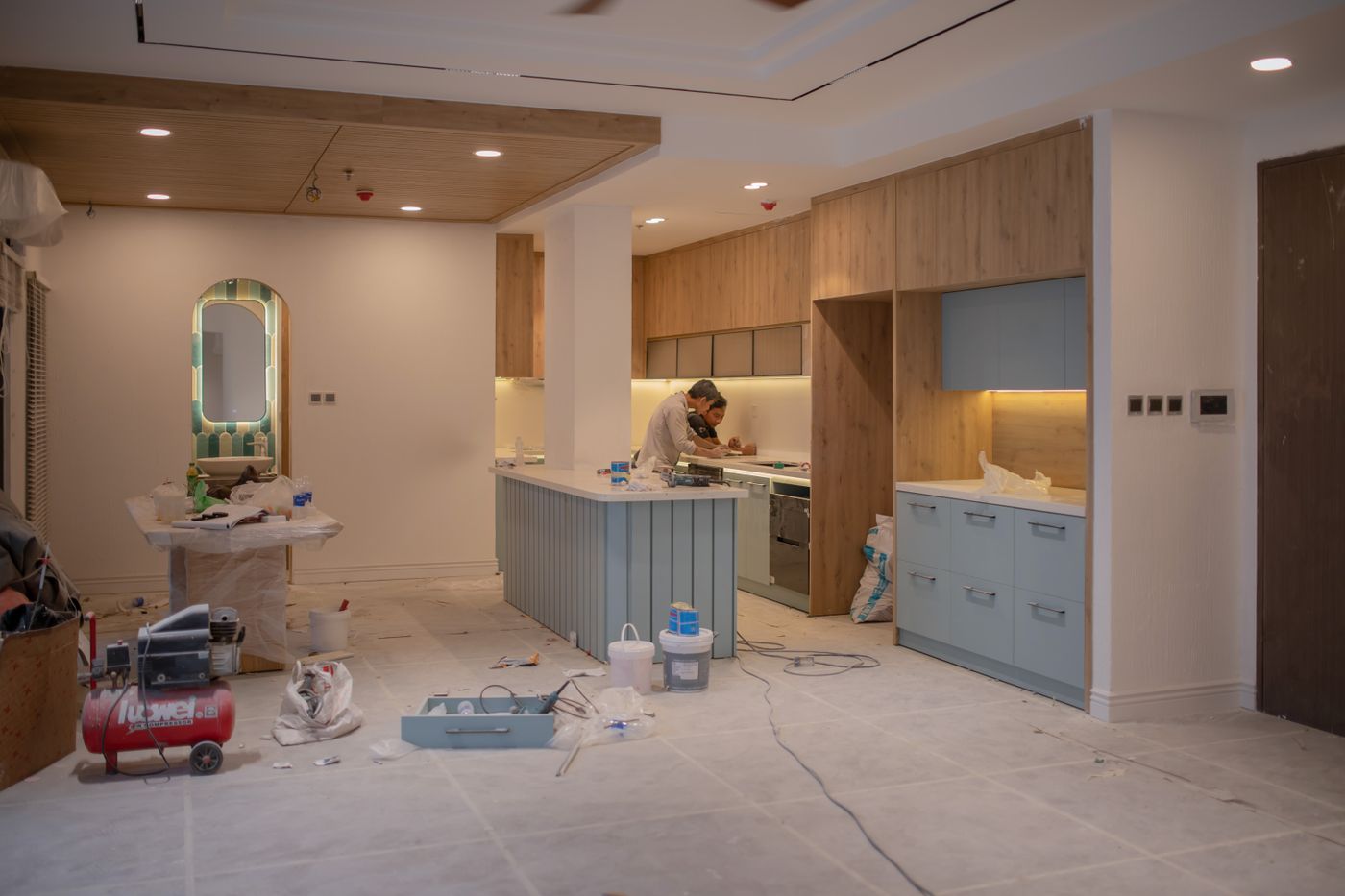
Common items covered include roof replacement, plumbing updates, electrical work, kitchen and bathroom remodels, flooring, and structural repairs. Cosmetic upgrades like paint and landscaping may also qualify if they are part of a broader renovation plan. The key is that every dollar you request for repairs must be backed by a contractor estimate or a home improvement contract.
One often overlooked point is the contingency reserve. While the VA does not require a specific contingency fund, many lenders will encourage or require a small buffer, typically 10 to 15 percent of the repair budget, to cover unexpected issues that surface during construction. This reserve is included in the total repair cost that goes into the loan calculation.
Repair costs also affect the appraisal. The appraiser will review the scope of work and the contractor bids to confirm that the as-completed value is realistic. If the repair costs are too low to achieve the projected value, the appraiser may lower the as-completed estimate, which in turn reduces the maximum loan amount.
The Maximum Supported Loan Amount: How It All Comes Together
The maximum supported loan amount is the final number that the lender can justify based on the purchase price, repair costs, and as-completed value. The formula is straightforward in concept: the loan amount cannot exceed the as-completed value. But there is a second constraint: the loan amount also cannot exceed the sum of the purchase price and the repair costs, plus any allowable fees and the VA funding fee.
In practice, the limiting factor is usually the as-completed value. If the purchase price plus repairs is less than the as-completed value, you have room to increase the loan up to that value, which could cover additional upgrades or closing costs. If the acquisition cost is already at or above the as-completed value, the loan is capped at the lower figure, and you may need to scale back your renovation plans or bring additional cash to the table.
Another factor that can affect the maximum loan is the borrower's entitlement. The VA guarantees a portion of the loan, and if you have used part of your entitlement on a previous loan, the remaining amount may limit the total loan you can obtain without a down payment. This is where working with a knowledgeable professional becomes important. A specialist who understands VA renovation loans can help you navigate entitlement calculations and lender overlays.
At this point in the process, many veterans find it helpful to consult someone who deals with these numbers daily. A conversation with Carlos Scarpero, VA Mortgage Specialist, NMLS 1674385 can clarify how your specific purchase price and repair estimates translate into a workable loan amount. Even if you are early in the planning stages, getting a ballpark figure from a specialist saves time and prevents you from falling in love with a property that does not pencil out.
Equity and the As-Completed Value
Equity is the difference between what the home is worth and what you owe on it. In a renovation loan, your equity starts to build as soon as the repairs are complete and the home reaches its as-completed value. If the loan is structured well, you could have instant equity if the as-completed value exceeds the total loan amount. This equity can be useful later if you need to refinance or sell the property.
The appraisal plays a central role here. The appraiser will estimate the as-completed value based on the plans, the contractor bids, and comparable sales in the area. If the market is strong and the renovations are well chosen, the as-completed value may come in higher than expected, giving you more loan capacity or more equity. If the market is soft or the repairs are not likely to add proportionate value, the as-completed value may be conservative.
What This Means for You as a Borrower
Understanding the interplay between purchase price, repair costs, and the maximum loan amount helps you set realistic expectations. You should start by identifying properties that are priced low enough to leave room for the repairs you want. Then get detailed contractor bids before you submit your loan application. The more precise your estimates, the smoother the appraisal and underwriting process will be.
Be prepared for the lender to ask for a contingency reserve. This is not a penalty; it is a safety net that protects you and the lender from cost overruns. If you finish the project under budget, the unused contingency can be applied to the principal or refunded, depending on the loan terms.
Also keep in mind that lender overlays can tighten the limits further. Some lenders may require a lower loan-to-value ratio than the VA maximum, or they may impose their own caps on repair costs. Shopping around for a lender experienced in VA renovation loans is worth the effort. A lender who understands the program can often find ways to maximize your loan within the rules.

For veterans who are ready to take the next step, having a clear picture of these three numbers makes the entire process less intimidating. You do not need to become an expert on VA loan limits overnight, but knowing how the pieces fit together puts you in control. Whether you are buying a fixer-upper or refinancing your current home to fund improvements, the same principles apply.
If you want a second set of eyes on your numbers, reaching out to Carlos Scarpero, VA Mortgage Specialist, NMLS 1674385 can provide clarity. A specialist can review your purchase contract, contractor bids, and appraisal to confirm that your loan request is within the limits and that you are not leaving any available funds on the table. With the right preparation, a VA renovation loan can turn a dated property into the home you have been looking for without requiring a large cash outlay.